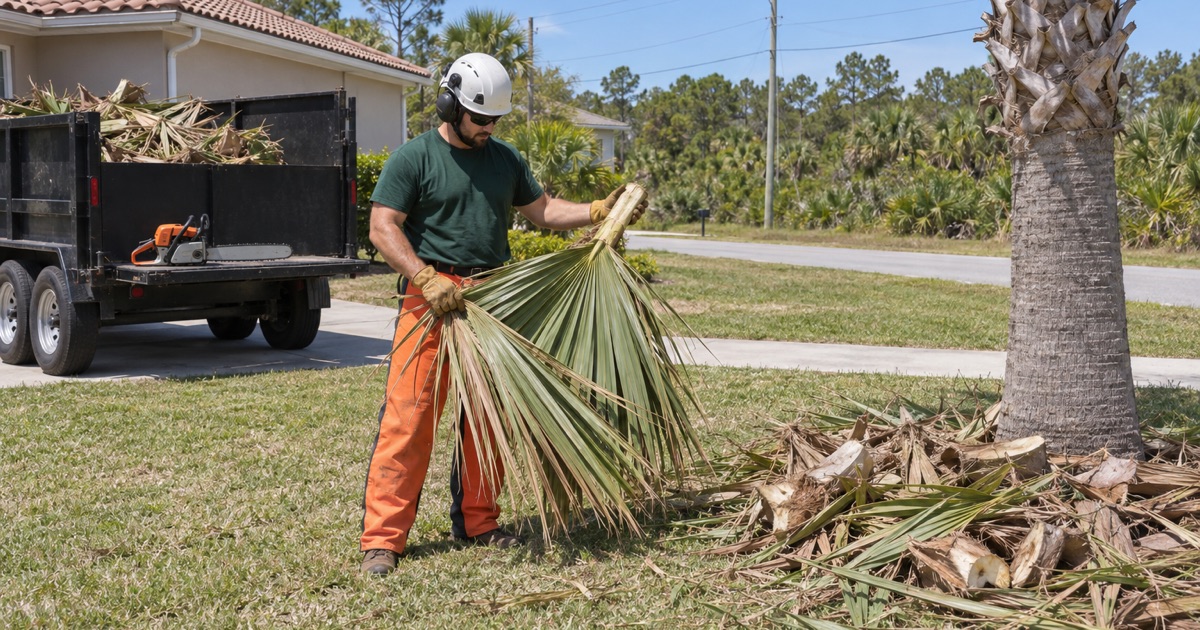
A Palm Is Not a Tree, and Almost Nothing Carries Over
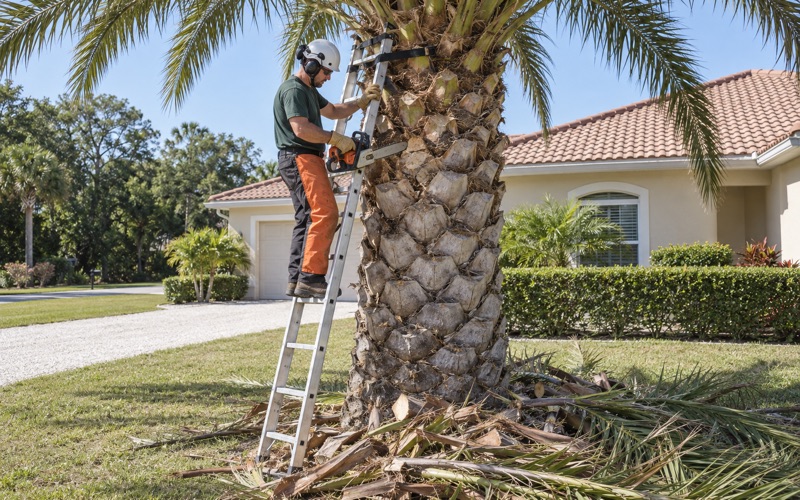
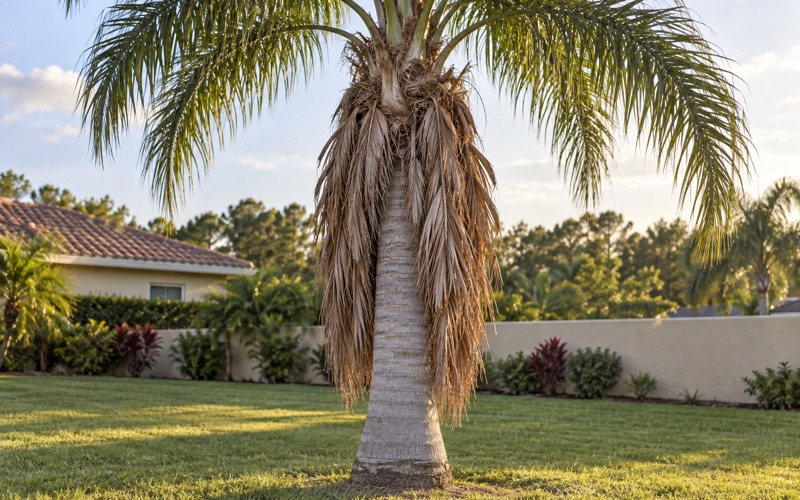
A palm is a monocot. There is no cambium, no annual ring, no branch collar and none of the wound compartmentalization a hardwood uses to walk off an injury. So crown cleaning, cabling, crown reduction and wound dressing either do not apply or actively harm it, and palm tree trimming is quoted from clear trunk feet and bud condition rather than from diameter.
One Growing Point, and a Trunk That Is Finished Growing
A palm carries a single growing point at the top of the trunk, and that trunk reaches its final diameter early and never adds another inch. Damage the bud and the palm is dead even while it still looks green, which is why we will not spike a trunk, will not cut into the crownshaft, and keep every rigging path clear of the spear.
Penciling: The Taper That Never Fills Back In
When a palm is short of water or nutrients the trunk it lays down narrows, and that pencil-thin section is permanent, because the trunk cannot thicken later to correct it. Penciling is therefore a dated record of a past problem and a structural weak point at the same time, so we read it as history and check what is carried above it.
Frizzle Top Is a Manganese Deficiency, Not an Infection
Frizzle top shows as new fronds emerging small, frizzled and scorched at the tips, most visibly on queen palm and royal palm, and it is a manganese deficiency rather than a pathogen. Caught while the bud is still alive it is correctable with the right soil amendment, so that palm goes to tree disease treatment and correction instead of onto the chip truck.
Lethal Bronzing and Spear Leaf Collapse
Lethal bronzing is a phytoplasma disease that moves up a palm from the lower fronds, drops fruit early and ends in spear leaf collapse, and it is not curable once symptoms show. Laboratory testing on trunk tissue is what separates it from a deficiency, so we advise the test before a removal that the whole street is going to see and copy.
A Ganoderma Conk at the Base of a Palm
Ganoderma zonatum causes Ganoderma butt rot, and a shelf-shaped conk at the base of the trunk means the lower trunk is already decayed. There is no fungicide, soil drench or injection that changes that, and the fungus persists in the site afterward, so the honest recommendation is removal, grinding, and not replanting another palm in the same spot.
Palmetto Weevil, and the Cuts That Invite It
The palmetto weevil is the largest weevil in North America, and it is drawn to stressed and freshly wounded palms, laying into the crown where the larvae destroy the bud from inside. Over-pruning, trunk spiking and transplant stress are the usual invitations, so we cut dead and hanging fronds only and leave the living crown and crownshaft untouched.
Laurel Wilt Does Not Take Laurel Oak
Laurel wilt is a vascular disease of the laurel family, redbay and swamp bay and avocado among them, carried by an ambrosia beetle, and the rapid wilt with black vascular streaking it leaves behind is hard to mistake. Laurel oak shares the name and nothing else; it is an oak and not a host. We name the species before we name the disease.
Sabal, Queen, Royal and Mexican Fan From the Driveway
Sabal palmetto, the cabbage palm, carries costapalmate fronds and often a persistent frond skirt, while queen palm is feather-leaved, self-cleaning and fast. Royal palm is feather-leaved on a smooth gray trunk under a heavy crownshaft. Mexican fan palm runs tall and thin with a fan frond and a thorned petiole. Species sets the price, the rigging and the disease list.
Invasive Tree Removal the Code Treats Differently
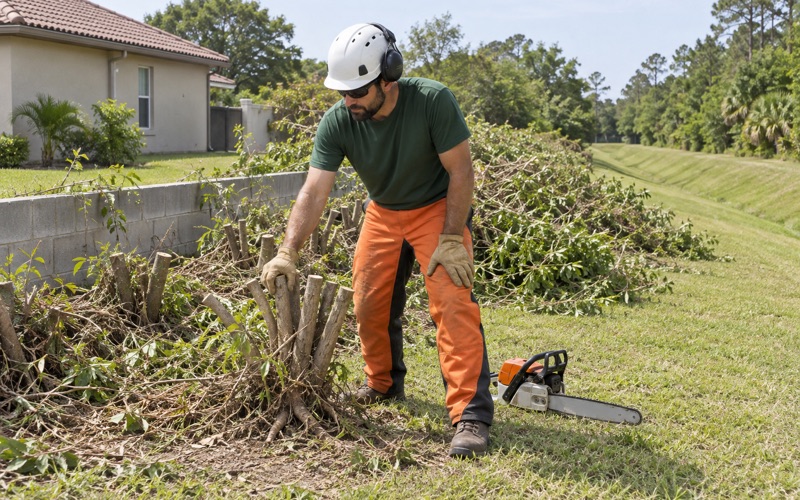
Brazilian pepper, carrotwood, Australian pine, melaleuca, Chinese tallow and earleaf acacia sit on the Florida noxious weed list or the Florida Invasive Species Council category lists, and North Port’s ULDC section 45-4(A) exempts them from the tree removal permit by name. Invasive tree removal is often the cheapest permitted work on a lot, so we check the list before assuming a tree is protected.